In a Russian potato field the harvest is a race against the freeze. The crop is in the ground all summer, but the moment soft autumn days turn, the soil goes hard and every day of waiting costs tubers that either freeze, bruise on a heavy digging crew, or rot in a mud-clogged windrow. This is why the question FOYA's export team hears most often from growers between Bryansk and Novosibirsk is not whether to mechanize lifting — it is how to set up a tractor-mounted potato harvester so it works on cold, stony, and heavily compacted ground without smashing the crop it is meant to save.
Potatoes are one of Russia's staple food crops. The commercial belts around the soil-rich Black Earth region, the central non-black earth farms, and the cooler northern latitudes all grow varieties meant to store through a long winter. That storage depends on clean, unbruised tubers, which makes the method of digging almost as important as the yield itself. A blunt or wrongly adjusted digger turns a promising crop into peeling stock, so the growers who profit are the ones who have slowed down, tuned the machine to their soil, and built a small human-plus-machine system around it.
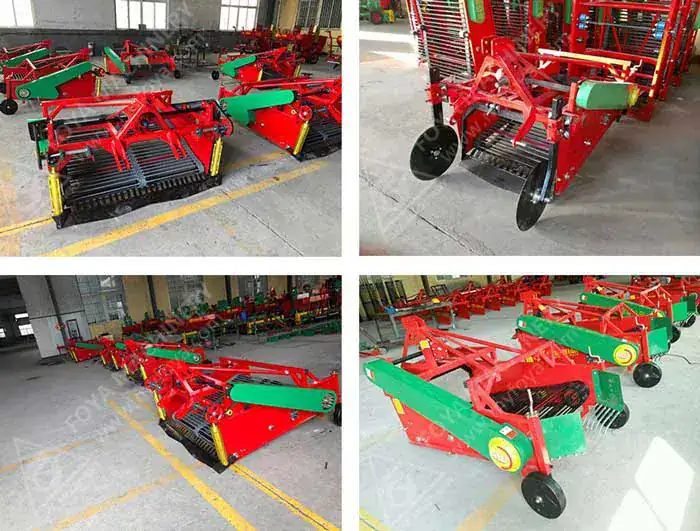
This case follows the pattern FOYA sees repeated from the Black Earth belt east to Siberia: a family or cooperative operation that stops hiring a harvest army of shovel diggers and pickers, buys one tractor-mounted potato harvester, and uses the freed labour and the wider digging window to get more clean tubers into storage. The lessons below are the adjustments those growers make that a catalogue page never tells you.
1. Why Cold Climate Digging Is Different
Warm-region potato harvests are forgiving. The soil is loose, the days are long, and a tuber left exposed overnight rarely suffers. Russia in late September is another world. Night frosts crust the topsoil, the clay content of the central and northern soils holds water so the ground turns heavy, and field stones that quietly sit in the loam all summer become the thing that blocks a digger share or punctures a lifted tuber.
Three cold-climate realities change every equipment decision:
- A short, hard deadline. Once soil moisture climbs and temperatures fall, the harvest window compresses to days, not weeks. Speed of lifting becomes a direct yield factor.
- Labour is scarce and seasonal. Digging crews have to be lined up, housed and paid at exactly the wrong moment of the season, and hand labour is slowest precisely when the calendar is tightest.
- Stones and clods punish bad settings. A digger set for light sandy ground will clog, bounce and damage tubers the moment it meets stony clay, so adjustment is not optional.
2. Manual Crews vs a Tractor-Mounted Harvester
Before the numbers, a note on what actually changed. The traditional Russian method is a two-stage dig: a plough or digger turns the row, then a crew of pickers walks the field gathering tubers by hand into sacks and buckets. For a holding of several hectares this is enormously labour-hungry, and it is exactly the cost and bottleneck that a harvester collapses.
Representative figures for a 3-hectare potato block in central Russia; actual values track local wages, fuel and seed variety.
| Metric (per hectare, typical season) | Hand dig & pick crew | FOYA tractor-mounted harvester |
|---|---|---|
| People needed at peak | 10–15 diggers & pickers | 1 tractor driver + 1–2 row cleaners |
| Effective digging rate | Slow, weather-dependent | 0.3–0.5 ha/hour in a clean row |
| Lost / bruised tubers | Fork damage & left tubers common | Controlled depth, low share speed |
| Window to finish 3 ha | Often 1–2 weeks or longer | Fits inside a few workdays |
| Labour cost exposure | High, seasonal & rising | One operator, mostly fixed |
| Dependence on weather | Stops in wet, cold rows | More rows lifted while soil is dry |
Read the table the way a Russian grower does and the deciding line is the window. A machine that lifts three hectares in a handful of weekday shifts, when the weather actually turns favourable, routinely outproduces a larger but slower hand crew that can only move when the whole army is available and the ground permits.
3. Field Setup That Works on Cold, Stony Soil
The catalogue says the harvester digs, separates and windrows in one pass. What the catalogue does not say is how to set it for the ground under your boots. Across FOYA's colder-climate references, three adjustments decide success:
- Digging depth just under the tubers, never deep into the pan. Growers set the share to run only a few centimetres beneath the lowest tuber set. Going deeper drags heavy clay and stones through the machine and bruises the crop for no reason.
- Lower the PTO and the ground speed on heavy rows. Dropping to 3–4 km/h and easing the drive lets the separation webs shake out soil and stones while sparing the tubers. Speed is the enemy of skin quality in cold clay.
- Keep the chains slightly loose and clear the webs often. A muddy blade or a tensioned chain builds clods faster than the machine can shed them. A quick tap-down every few rows keeps the webs honest in wet stony conditions.
4. Tuning the Harvester by Ground Type
| Ground condition | Digging depth | Ground speed | Operator habit that pays |
|---|---|---|---|
| Light sandy loam (south) | Shallow–mid | 4 km/h | Let soil pass; least chain choke |
| Heavy clay / compacted | Mid, just under set | 3 km/h | Slower webs, drop speed in wet rows |
| Stony field | Keep above pan | ≤ 3.5 km/h | Clear stones from webs to avoid block |
| Frozen crust mornings | Wait til ground thaws | — | Dig after the sun softens topsoil |
The width and capacity of the model matter less than whether the driver treats the first pass as a tuning run. On the first cold morning, most successful operations lift a short trial row, stop, and adjust share height and web clearance before committing the whole field.
5. What Russian Growers Report After Switching
- Cleaner tubers reach storage. Lower share speed and right depth cut the split and bruised tubers that would otherwise downgrade a batch destined for winter storage or seed.
- The harvest fits the weather. Instead of hoping the crew finishes before the freeze, the block is dug in the handful of good days around early September.
- Labour is redeployed, not wasted. The one or two people left on the row do the careful picking that a machine cannot, while the harvester does the heavy digging.
- Machine-plus-tractor fits existing farms. A mid-size tractor on a standard three-point hitch runs the unit with no separate engine, motor or fuel line to buy.
- Payback lands in one to two seasons. The saving in seasonal crew cost plus the value of tubers no longer left in the ground or bruised usually covers the machine quickly.
- Seed and food-grade lots stay separate. Cleaner separation loading means growers keep premium tubers apart for replanting or the fresh market instead of mixing everything.
6. From Hand Digging to a System
For a holding that has outgrown hand crews but is not ready for a large combine, a FOYA tractor-mounted potato harvester sits in the gap between a shovel and a self-propelled machine. It digs, separates and lays the crop in a clean windrow that a small crew clears behind the tractor. Farms that push to larger blocks or rougher multiple rows often step up to a self-loading potato harvester with an onboard hopper, which lifts a row and carries the crop so even fewer people are needed in the field.
The through-line in every case is the same. Potato profit in a cold climate is decided less by yield per hectare at harvest than by how many clean, unbruised tubers you can lift and store before the ground turns. A harvester tuned to the soil and driven at the right speed is what widens that window — and what turns the most weather-dependent week of the year into a controllable one.
7. The Cold-Climate Bottom Line
Russian potato country does not reward the fastest digger; it rewards the harvest that gets the most undamaged tubers into storage inside the short dry window. A tractor-mounted harvester achieves that not by magic but by replacing a slow, weather-tied hand army with a machine that digs at the right depth in one pass, at a speed the soil can stand. Set the share shallow, keep the webs clear, slow down on the clay and the stones, and the numbers follow — fewer people, cleaner crop, and a harvest that finally fits the calendar instead of fighting it.
Frequently Asked Questions
When is the right time to dig potatoes in cold Russian regions?
Central growers around Bryansk and Lipetsk usually start in late August to early September and aim to finish before the first hard frost. Further east and north the window shortens. Because a tractor-mounted harvester lifts rows several times faster than a hand crew, more of the crop comes out while the soil is loose and the tubers are still dry.
Does a potato harvester damage tubers in cold, stony or heavy clay soil?
Damage depends on adjustment more than the machine. On stony and heavy clay ground growers lower the share speed, ease the digging depth to just under the tuber set, and widen the separation gap so stones and clods fall out before tubers reach the rear. Working the tractor slow and keeping the share clean cuts bruising and splits dramatically compared with a soil-tune meant for sand.
How many people does a FOYA tractor potato harvester replace?
A two-row harvest that would need ten to fifteen hand diggers and pickers is covered by one tractor driver plus one or two people clearing windrows. In grower cases across Russia the tractor-mounted unit typically pays for itself in one to two seasons once crew cost, digging speed and lost tubers are counted together.
Will my tractor run a FOYA potato harvester on rough northern fields?
Most FOYA tractor-mounted potato harvesters run on a standard three-point hitch with PTO at 540 rpm and suit the 20–40 horsepower range, so a mid-size Russian tractor handles them comfortably. On uneven ground slow below 4 km/h and keep chain tension slightly loose so stones pass through without blocking the separation webs.
Is Your Harvest Still Racing the Freeze?
If you are still lining up a digging crew every September, or losing tubers to cold soil and stone, the FOYA team can size a tractor-mounted or self-loading harvester to your block size, tractor and soil type, and suggest the cold-climate settings local growers use. Tell us your hectares, your tractor and what your ground is like and we will point you at the set that fits.
Contact us for potato harvester advice and pricing matched to your cold-climate field.