Every farm faces the same fork in the road when buying new equipment: buy an implement that runs off the tractor's PTO shaft, or buy a self-propelled machine with its own engine and driver platform. The decision looks like a price question, but it is really a question about labor, field hours, fuel, and tractor availability.
In this comparison we put the two drive systems side by side with real numbers: purchase price, cost per acre, fuel burn, labor requirements, and maintenance. By the end you will know exactly when a simple PTO machine is the money-saving choice, and when a self-propelled unit pays for itself in harvest speed.
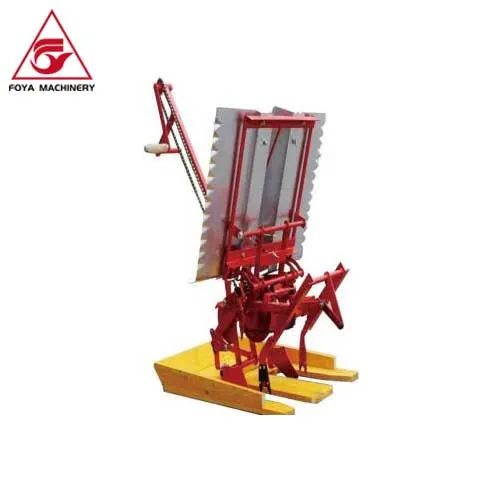
What “PTO” and “Self-Propelled” Actually Mean
PTO (Power Take-Off) describes machinery that has no engine of its own. It connects to a tractor through the spinning PTO shaft at the rear, drawing both power and mobility from the tractor. Examples in the FOYA range include the silage baler, disc mower, and round baler.
Self-propelled machines carry their own engine, gearbox, and driver seat. They move and power their working parts independently. Classic examples are the self-propelled silage harvester, combined harvester, and windrow pick-up baler.
The Head-to-Head Table
| Factor | PTO-Driven Implement | Self-Propelled Machine |
|---|---|---|
| Purchase price | 40–60% lower | High, but self-contained |
| Engine | Uses tractor engine | Dedicated engine |
| Operator count | 2 (tractor + helper) | 1 |
| Field speed | 3–5 km/h | 6–10 km/h |
| Fuel per acre | Low on small acreage | Lower on large acreage |
| Headland travel | Slower, more turning waste | Faster turnarounds |
| Mobility | Needs tractor attached | Drives itself to any field |
| Maintenance | Simple gears, chains, PTO shaft | Engine + complex driveline |
| Best fit | Small farms, mixed tractor use | Large fields, single-task speed |
1. Purchase Price & Break-Even Math
The sticker price is where PTO machinery wins outright. A tractor-driven silage or baling implement typically costs 40–60% less than its self-propelled successor, simply because you are not paying for a second engine, a heavy chassis, or a driver station.
But price is only half the story. The self-propelled machine replaces labor and compresses season windows. Run the numbers over a full season:
| Cost Element | PTO Setup (per season) | Self-Propelled (per season) |
|---|---|---|
| Purchase price (one-off) | $12,000–$20,000 | $45,000–$90,000 |
| Operator labor | ~$3,000 (extra helper) | ~$1,500 (one operator) |
| Fuel & maintenance | ~$1,800 | ~$2,400 |
| Tractor-hours added | High (wear cost) | None |
| Season throughput | Baseline | 25–35% more acres/day |
On a 200-acre operation the extra 30% daily throughput from a self-propelled machine often shrinks the harvest window by 3–5 critical days. If a weather delay would cost you thousands in lost crop quality, that speed is real money.
2. Labor: The Hidden Cost People Forget
Many PTO implements still need a helper riding on the machine or guiding the swath, in addition to the tractor driver. That is a second wage, plus extra meals, transport, and supervision. A self-propelled machine consolidates everything into one seat, one wage, and one operator who can also do the final quality checks.
In labor-scarce regions this is often the deciding factor. If you cannot find a reliable second hand during harvest, the “cheap” PTO machine starts costing you in downtime and rushed operator hires.
3. Tractor Availability & Wear
Every hour you run a heavy PTO implement is an hour that tractor is not hauling wagons, pulling a seeder, or handling another job. For diversified operations the tractor is the busiest machine on the farm, and strapping a baler or harvester to it for two solid weeks can cause a scheduling collision.
There is also mechanical wear: heavy PTO loads strain the tractor's transmission and rear axle, and the added hours cut into your tractor's resale value. A self-propelled machine removes that strain entirely, leaving the tractor free for transport and other chores.
4. Fuel Efficiency Depends on the Job Size
There is no single “winner” on fuel. PTO machinery shares the tractor's engine, which is efficient for small, low-throughput jobs. Self-propelled machines carry engine power matched to the workload, so on big fields they burn less fuel per acre than an oversized tractor lugging a heavy implement.
A practical rule: below roughly 100 acres, the PTO route usually uses less total fuel per season; above that, and especially for silage or combining, a self-propelled silage harvester starts to pull ahead on both fuel and time. For operations that never pass that threshold, the PTO machine and a cheaper tractor remain the leanest system.
5. Maintenance & Reliability
PTO implements are mechanically simpler — a gearbox, chains, and a PTO shaft that can be greased and tensioned with basic tools. When they fail, parts are cheap and any tractor mechanic can fix them. Self-propelled machines combine an engine, a hydrostatic or mechanical drive, and hydraulics in one unit, so a breakdown sidelines the whole job and repairs are pricier.
That simplicity favors PTO for farmers who prefer to do their own maintenance. But note that a self-propelled machine has plenty of internal capacity and is built to long service life, provided you follow the service interval checked in the operator manual.
6. When the Choice Is Obvious
- Choose PTO-driven if you already own a suitable tractor, farm under ~100–150 acres/year for that crop, want the lowest purchase price, and can handle two operators at peak.
- Choose self-propelled if you run large acreage, have a narrow harvest window, struggle to hire labor, or cannot afford to tie up your tractor for weeks during the season.
FOYA builds both sides of the lineup. Our tractor-PTO silage baler suits the small and mid-size farm, while the self-propelled silage harvester is built for big-acreage speed. For hay and straw, compare the self-propelled square baler against a tractor-drawn pick-up baler before you write the cheque.
Frequently Asked Questions
Which is cheaper — PTO-driven or self-propelled machinery?
PTO-driven implements are almost always cheaper to buy, because they reuse the horsepower of a tractor you already own. A tractor-driven implement typically costs 40–60% less than the equivalent self-propelled machine. However, self-propelled machines save labor and time, so the lower purchase price only wins if your tractor is free to spend on that job during harvest.
When should I choose self-propelled over PTO-driven machinery?
Choose self-propelled equipment when you need one operator to run a big job very fast, when your tractors are already used for other tasks, or when you work large fields where travel time and turning at headlands waste hours. For a large silage harvest or combining, a self-propelled machine finishes 30–50% faster per acre than a tractor-and-implement train.
Do PTO machines wear out tractors faster?
Yes, heavy PTO implements put extra load on the tractor engine, gearbox, and rear axle, and they add tractor hours that count toward your tractor's wear and resale value. A PTO baler or harvester may add 300–600 operating hours per season to the tractor. That hidden cost matters when you reinvest the tractor every 5–8 years.
Which drive system uses less fuel per acre?
For small jobs a PTO implement is fuel-efficient because it shares the tractor's engine. For big, heavy operations a self-propelled machine often burns less total fuel per acre because its engine is sized to the workload and it eliminates double-passage travel. As a rule of thumb, at under ~100 acres a PTO setup is usually cheaper to run; above that, self-propelled economics improve quickly.
Is a self-propelled machine worth the higher purchase price?
It depends on your break-even point. If the self-propelled machine is at least 25–30% faster per day and lets you drop one hired operator, the extra capital usually pays back within 2–4 seasons on operations above a few hundred acres. Small farms often never reach that threshold, so a cheap PTO implement and a spare tractor remain the smarter buy.
Need Help Choosing the Right Drive System?
Not sure whether to invest in a PTO implement or step up to a self-propelled machine? FOYA Machinery's team will work through your acreage, tractor fleet, labor, and harvest window to recommend the drive system that saves you the most. We ship to over 50 countries with factory-direct pricing and full after-sales support.
Browse our product range for detailed specifications, or get a personalized recommendation from our team.
Contact us for a recommendation tailored to your tractor fleet and harvest schedule.