For most of the world's rice, the harvest is still done by hand. In the Philippines — the ninth-largest rice producer on the planet — more than two million hectares of paddy are threshed every season, and a large share is still cut with sickles by crews of bundled workers who move up the field row by row. The math has never favored that system, but for years smallholder farmers had no affordable alternative.
That is starting to change. Across Luzon, Western Visayas and Mindanao, small rice farms are trading the sickle for a tractor-mounted rice reaper — and the results in labor savings, grain recovery and timing are small enough to measure on a single farm and big enough to reshape a whole village's harvest season. These are the adoption stories FOYA has been hearing from dealers and end-users since the first units reached the archipelago.
1. The Country Context: Why Sickle Harvesting Persists
Rice in the Philippines is mostly grown on small plots. The average rice farm is well under two hectares, and the terrain is a patchwork of terraced and rain-fed paddy where large combines often cannot turn around. For decades this kept harvesting a manual job. A typical crew of five to eight workers cuts, bundles and carries panicles to a thresher, earning a daily wage that competes with rice's narrow profit margin.
Three pressures push farmers toward mechanization even on small lots:
- Labor is scarce at peak season. Every regional harvest happens in the same two-to-three-week window, and demand for cutters spikes faster than workers can arrive.
- Wages keep climbing. Post-harvest labor now claims a large slice of a small farm's revenue, and paying overtime to keep a crew motivated through wet fields is common.
- September-to-November typhoon windows are unforgiving. A two-week delay in getting rice off the field can drop yield or spoil standing grain.
2. Application Scenario: A 3-Hectare Farm on Luzon's Central Plain
Take a representative case that FOYA's dealer network sees repeatedly: a three-hectare farm in Nueva Ecija, the rice bowl of the Philippines. The owner runs a single 30 hp tractor that sits idle for most of the year. Yields run about 4.5 tons per hectare of paddy at 24% moisture.
Before adopting a reaper, the farm hired a crew of eight cutters and loaded them into the field at dawn. Cutting, bundling and hauling three hectares spread across roughly five and a half days. The crew walked away with a wage bill that, after meals and supervision, came close to PHP 11,000 for the season's main harvest.
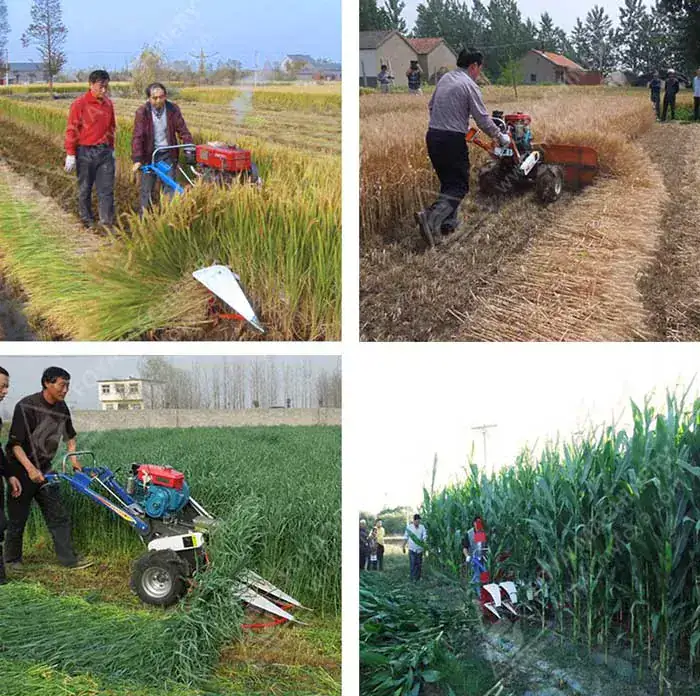
After adding a FOYA tractor-mounted rice reaper, that same three hectares is cut in a single day. One tractor driver and one field helper pick up the neat windrows that the reaper lays. The standing labor drops to a fraction of the old crew bill, and because the reaper cuts low and clean, less grain is left in the field behind the machine.
3. The Numbers: Hand Crew vs FOYA Rice Reaper
| Metric (per 3 ha harvest) | Hand-cutting crew | FOYA rice reaper (30 hp tractor) |
|---|---|---|
| Harvest time | 5–6 days | 1 day |
| Workers in the field | 6–8 | 2 (tractor driver + helper) |
| Labor cost (PHP) | ≈ 11,000 | ≈ 2,800 |
| Field losses (of yield) | 3–5% | < 1% |
| Est. grain saved on 13.5 t | — | ≈ 300–500 kg |
| Weather risk exposure | High (crew speed varies) | Low (crop off field fast) |
Across the three-hectare block, the reaper cuts the harvest labor bill by roughly 70% and, through lower field losses, recovers an extra 300 to 500 kilograms of paddy per season. At current local buying prices, that recovered grain alone covers a meaningful share of the machine's running costs.
4. A Second Story: Custom-Hire Service in Iloilo
The second adoption pattern FOYA sees is not a single farm buying a machine, but a farmer-buyer turning it into a custom-hire service. In Iloilo, a reaper owner charges neighbors a per-hectare cutting fee for the wet-season rush. Because the reaper clears a hectare in an hour or two rather than in a full crew-day, one machine can serve several villages in a single harvest window.
At a season rate that undercuts the manual-crew cost per hectare, the owner keeps the machine busy through back-to-back contracts, spreads the purchase price across dozens of hectares, and often recovers the reaper's full cost in a single planting season. For the farmer clients, it is cheaper than organizing a crew; for the owner, it is a reliable second income stream with the tractor and trailer they already own.
This service model is exactly why FOYA offers a family of field-tested reaper models, from the fixed-width rice-wheat reaper for farms that rotate crops to the reaper binder for growers who still want bundled, tied stalks for transport.
5. Measurable Benefits Farmers Report
- Time-to-harvest drops dramatically. What took a week of coordinated crew labor is finished in a day, freeing farmers to time cutting to the exact moisture content instead of waiting on workers.
- Higher grain recovery. A loss rate below 1% versus a hand crew's 3–5% means more marketable paddy from the same field, with no extra land.
- Lower and more predictable cost. A fixed fuel-and-driver bill replaces a variable crew payroll that is hard to predict during peak demand.
- Better cash flow for small plots. Because the neighbour fee per hectare stays below manual-crew cost, even farmers who cannot hold a tractor benefit immediately.
- Simple support and parts. Easily replaced cutter blades and a drive system that runs off an existing PTO keep downtime short on islands where specialist repair shops are far away.
6. Payback Snapshot by Farm Size
| Farm / model | Area served | Est. labour saving / season | Typical payback |
|---|---|---|---|
| Single 3 ha farm (rice reaper) | 3 ha | PHP 8,000 + | 15–18 months |
| 5–8 ha family operation | 5–8 ha | PHP 15,000–25,000 | 10–14 months |
| Custom-hire service (Iloilo model) | 30–60 ha / season | Service income on top | 4–8 months |
| Cooperative / shared machine | 50+ ha | Shared across members | 3–6 months |
Payback varies with local wages, fuel price and how many hectares the machine works in a season, but on typical Philippine small farms the trend is consistent: the reaper earns back its price well within two harvests.
Frequently Asked Questions
Can a FOYA rice reaper work in wet Philippine paddy fields?
Yes. The FOYA tractor-mounted rice reaper is built for both dry and waterlogged paddy conditions. Its 1.0–1.5 m cutter bar cuts close to the soil line with an adjustable 50–150 mm cutting height, and a loss rate below 1% keeps grain recovery high even in the muddier fields typical of the wet season in the Philippines.
What tractor power do I need to run a rice reaper?
The FOYA rice reaper operates with a tractor of 15–35 hp running its PTO at 540 rpm. Most smallholder tractors in the Philippines — 26–35 hp four-wheel tractors or PTO-equipped walking tractors — are compatible. Confirm your PTO speed and hydraulic capacity before ordering so your unit matches your tractor perfectly.
How long does it take to pay back a rice reaper on a small farm?
On Philippine small farms, the machine typically pays for itself within one to two wet-season harvests. Hand-cutting labor alone can run thousands of pesos per week, and with 3–5% more grain recovered through lower field losses, most FOYA customers report full payback in 8–18 months.
Is a rice reaper useful for other crops besides rice?
Yes. FOYA reapers also cut wheat, barley and several fodder and legume crops. The adjustable cutting height and clean row-laying work well for wheat and soybean, and the rice-wheat reaper adds wider cutting width for farms that rotate rice and wheat through the year.
How do Filipino farmers get spare parts and service for FOYA reapers?
FOYA ships machines with common wearing parts, and our export team supports buyers in the Philippines with manuals, video instructions and a steady supply of cutter blades and drive components. Most dealers hold basic cutter-bar spares locally, and our after-sales team is available on WhatsApp for setup and troubleshooting.
Is a Rice Reaper Right for Your District?
The adoption pattern from the Philippines is repeatable wherever rice is cut by hand on small plots: mechanized cutting is faster, recovers more grain and cuts labor risk in peak season. If your operation sits on a single tractor, a FOYA rice reaper turns that tractor into a fast, low-loss cutting machine one day per season at a time you choose.
Browse the FOYA rice reaper product page for full specifications, or get in touch for sizing advice matched to your field conditions and tractor.
Contact us for rice reaper recommendations and pricing tailored to your farm's size and tractor.