Brazil is a statement in scale. Home to the world's largest commercial cattle herd and the driving force behind global beef exports, its feedlots and dairy belt chew through an enormous volume of conserved forage every dry season. For decades much of that silage was put up the old way — a crew of workers moving down a standing cornfield with knives, cutting and piling forage by hand before a tractor ferried it to a pit. That system is bending under the weight of Brazil's own success.
Labor is scarce and expensive at chopping time, crops must come off at the exact moisture window, and herds only grow. Across São Paulo, Paraná, Minas Gerais and Mato Grosso, farm owners are replacing hand crews with a silage harvester, a baler and a packing or bagging line — turning the most labor-hungry week of the season into a two-day mechanized operation. These are the real numbers FOYA's team has gathered from the transition now underway on Brazilian corn silage operations.
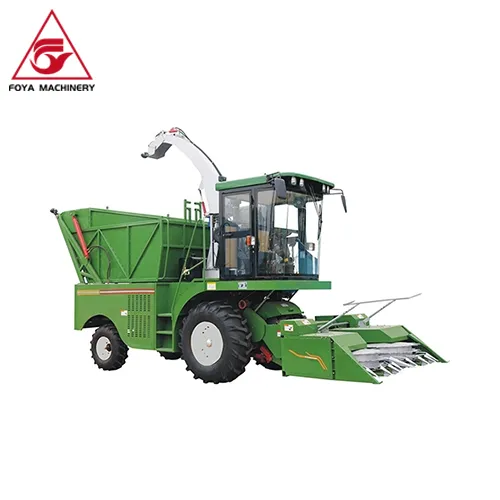
1. Why Manual Chopping Persisted — and Why It Is Ending
Corn silage in Brazil is cut young, at high moisture, with the whole plant chopped to a packable particle size. On a moderate plot of five hectares, one person hand-cutting can cover little more than a fraction of a hectare per day, which is why owners traditionally assembled a seasonal crew of twenty or more people — each paid a daily wage, fed and supervised — to get forage off before it dried past the ideal 62–68% moisture band.
Three forces have tipped the arithmetic toward machines:
- Peak-season labor is evaporating. Sugarcane, coffee and construction compete for the same rural workers, and the days when a chopping crew was easy to assemble are gone.
- Timing is worth more than ever. Modern dairy rations are built around high-energy silage; forage cut too early or too late loses digestible energy that no later management can restore.
- Scale keeps growing. Feedlots now plan for thousands of tonnes of conserved forage, volumes a hand crew physically cannot produce in the window available.
2. Application Scenario: A 30-Hectare Corn Silage Block in São Paulo
Consider a representative operation that FOYA encounters across southeastern Brazil: a 30-hectare corn silage block feeding a beef feedlot of roughly 450 head, plus a milking platform that drinks a big share of the pit. The owner has a single mid-power tractor and, until recently, ran the harvest as a two-week scramble with a hired crew.
Before mechanizing, the operation budgeted about 2,200 labour hours for the block — cutting, hauling and then trampling the pit — spread over more than two weeks. The payroll, chasing a crew that thinned as other local farms made their own offers, climbed every season.
After bringing in a FOYA tractor-mounted silage harvester, the same 30 hectares is cut and chopped in about three working days. One tractor pulls and powers the unit while a single feed truck shuttles forage to the pit. The standing crew is cut to a handful of people managing the pile, and the entire block is conserved inside its target moisture window instead of across two drifting weeks.
3. The Numbers: Manual Crew vs a FOYA Silage Harvester
| Metric (per 30 ha block) | Manual hand crew | FOYA tractor-mounted silage harvester |
|---|---|---|
| Harvest window | 12–16 days | 3–4 days |
| People in the field | 20–28 workers | 2–4 (tractor driver + pit crew) |
| Labour hours for the block | ≈ 2,200 | ≈ 180 |
| Labour cost share of harvest (R$) | 35–45% | < 10% |
| Cut within moisture window | Rarely | Consistently |
| Chop consistency / packing | Uneven | Uniform, easier to pack |
Across the block the mechanized line cuts harvest labour hours by roughly 90%. Even after fuel, wear and the machine's share of the purchase price, per-tonne conservation cost on this operation fell, and the forage feeding out of the pit carried a more uniform, more digestible particle size — worth real kilograms of liveweight and litres of milk downstream.
4. Two Adoption Paths FOYA Sees in Brazil
The São Paulo example is a single owner. But FOYA sees the mechanization wave arrive through two distinct doorways.
Path A — Owner-operated tractor-mounted line
| Factor | Tractor-mounted (Path A) | Self-propelled (Path B) |
|---|---|---|
| Best fit | 5–60 ha farms with a tractor | Large feedlots & hire contractors |
| Power source | Uses the tractor PTO | Own engine & drive |
| Entry cost | Lower | Higher |
| Mobility between sites | Moves with the tractor | Drives itself, very mobile |
| Throughput per hour | Solid for mid-size blocks | Highest, minimum downtime |
Path A, the owner's own silage harvester, is spreading fastest among mid-size producers because it converts a tractor the farm already owns into a harvest machine and shares the same PTO drive components, keeping acquisition and spares within reach of family operations. Path B is the self-propelled silage harvester, which FOYA sees bought by large feedlots and by contractor operators who cross the Cerrado servicing many clients in one season — the machine earns its own keep on acreage far beyond a single farm.
5. The Baled Route for Dairies
Not every Brazilian dairy wants a bunker silo. Across the southern states, wrapped silage balers are multiplying because a bale seals its own package — no concrete pit, no heavy packing equipment, no exposed face losing quality to air. A dairy can bale standing forage in the field, wrap each package with film and stack it at the feedyard, then open only what the ration calls for. For small and mid-size herds this cuts the capital step that bunker ensiling demands while tackling the same labor problem at the point of harvest.
6. Measurable Benefits Farmers Report
- Cost per tonne drops sharply. A mechanized line conserves forage with a compact crew, pricing labour out of the bottleneck it used to be.
- The moisture window is finally respected. Cutting in days instead of weeks keeps whole-plant moisture in the packable band where fermentation and feed value are highest.
- Crew risk disappears. No more scrambling for bodies at wages that reset upward every season, or losing a week if a crew walks off mid-harvest.
- Chops feed out better. Uniform chopping packs denser in the pit or bale, reducing storage loss that a coarse, trampled pile quietly accepts.
- The tractor works harder all year. A PTO silage unit turns idle tractor hours in the off-season into harvest throughput, improving the tractor's own ROI.
7. Payback Snapshot
| Operation type | Area / volume | Est. labour saving per season | Typical payback |
|---|---|---|---|
| Mid-size dairy (tractor-mounted) | 10–20 ha | Large crew hours replaced | 1–2 seasons |
| Beef feedlot, 30–60 ha | Own line + pit | ≈ 90% of harvest labour | 1–2 seasons |
| Contract / self-propelled | 300+ ha per season | Service income on top | < 12 months |
| Wrapped bales for dairy | By the bale | No pit capital, less field labour | 2–3 seasons |
Payback depends on local wages, fuel price and how many hectares a machine works each season, but on Brazilian operations the direction is consistent: mechanized silage repays its cost well within two conservation seasons while improving feed quality that manual systems structurally cannot match.
Frequently Asked Questions
Why is silage mechanization growing in Brazil?
Brazilian feedlots and dairy herds are expanding while seasonal farm labor is scarce and costly. Hand-chopping a hectare of standing corn takes many people-days, so operations of every size are shifting to tractor-mounted and self-propelled silage harvesters that cut, chop and load in a single pass.
Tractor-mounted or self-propelled silage harvester — which do I need?
A tractor-mounted silage harvester runs off the tractor PTO and suits mid-size farms that already own a tractor, at a lower entry price. A self-propelled unit has its own engine and moves independently, giving large feedlots and service contractors higher throughput, faster field speeds and mobility to serve many hectares across several sites.
How much labor does a silage harvester save compared with hand chopping?
On representative Brazilian corn silage plots, hand cutting, chopping and hauling roughly one hectare needs a large crew working for days, while a PTO-mounted silage harvester clears the same area in a single working day with one tractor driver. Labor hours per hectare can fall by more than 80%.
Can a silage baler work for smaller Brazilian dairy farms?
Yes. Wrapped silage bales suit small and mid-size dairy farms that lack the bunker silo and packing equipment used by large feedlots. Bales seal individually, reduce storage losses and can be handled and fed out with simple equipment, which is why baled silage adoption is rising across Brazil's southern dairy belt.
How are FOYA silage machines serviced in Brazil?
FOYA machines ship with common wearing parts and documentation, and the export team supports Brazilian buyers with sizing advice, video guides and after-sales help over WhatsApp and email. Blades, bearings and drive parts are straightforward to source, and the same PTO drive components are shared across FOYA harvester models to keep spares simple.
Is Your Operation on the Mechanized Side of the Shift?
The transition that is reshaping Brazilian corn silage — from a crew with knives to a driver with a harvester — follows the same economics wherever conserved forage feeds cattle. If your operation still puts up silage by hand, or does it with a machine that cannot keep pace with your herd, the FOYA team can map a tractor-mounted, self-propelled or baled route matched to your hectares, tractor power and budget.
Review the FOYA silage harvesters range or ask directly for a sizing recommendation based on your fields and daily feed demand.
Contact us for silage machinery advice and pricing tailored to your operation's size and tractor.